

Welcome to this week’s free edition of The School of Knowledge. We curate systems, frameworks, and manuals from one source only: practitioners with skin in the game. Want full access to close the gap between learning and doing? Click below to access your 20% discount.
Here’s a roundup of everything I found interesting or useful last week:
📚 Books
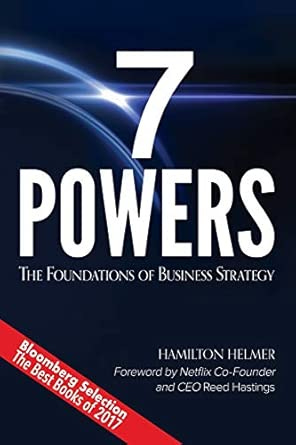
I’ve wanted to read this book for a long time and have just got through the first chapter—scale economies. Absolutely can’t wait to share my thoughts with you.
💭 Quotes
A great quote on perspective:
“ A frog in a well does not know the great sea”
- Japanese Proverb
📜 Articles
Lots of useful advice on how to organise your notes. Konik’s idea of synthesis notes has closed a loop i’ve long wanted to close. A must read for those who take digital notes and especially if you use Obsidian.

NotebookLM is a power tool and Eva, from Lifelong Learning Club gives you a fantastic overview, including use cases on how to get started in under 5 minutes.

🎧 Podcasts
Peter Kaufman shares his advice on the importance of multidisciplinary thinking, along with why he thinks reciprocation is one of the most important skills you can develop—and why you must always go first.
❓Questions
A great question posed by Lifelong Learning Club on using AI to build expertise, including my response. What are you thoughts?
Lifelong Learning club: You cannot evaluate what you do not understand. You can only know what “good” AI output looks like if you already know the subject deeply.
What do you think are the implications for learning? Is procedural fluency (knowing how to produce the work) a prerequisite for evaluative fluency (knowing how to assess and improve the work), or can we shortcut straight to expert judgment via alternative learning pathways?
The School of Knowledge: I would say in general your level of analysis is surmountable to your level of expertise. I don’t think you can shortcut your way there, but I can see how AI could accelerate learning through quicker feedback and iteration in certain domains. However, you still have to do the work. Even then, there’s no guarantee you’ll be an expert, or in fact better at all if your learning practices are poor.
If I want to become a better essayist —AI can give me advice on formatting, voice, punctuation, and link the best 100 essays for me to read and learn from. It could do all of that in seconds/minutes. AI can spot patterns and draw conclusions from these essays—but if I can’t, what am I achieving? And if AI is identifying expert level patterns and offering them to me on a silver platter, am I developing expert judgement?
“To understand is to know what to do” - Ludwig Wittgenstein
Or, perhaps:
“To understand is to know how to see”
To comment on the thread just click through below:
👀 Incase you missed it
A round up articles I published in Jan (note, I was pretty ill for a few weeks so wasn’t a great deal).
19 Thinking Tools For Making Better Decisions

Heuristics help us make sense of the world, but when we fail to think—or worse—outsource it, we give away a little piece of our autonomy. It’s never been harder to tell fact from fiction, guru from n…
The Next Chapter

Over the last couple of weeks I’ve taken some much-needed time off from writing The School of Knowledge. Last year was a busy year for me both professionally and personally—especially from September—…